jeudi 11 octobre 2012

Ecomobilité Ventures injecte 5 millions d’euros dans 3 startups dont Zilok


Ecomobilité Ventures, nouveau fonds d’investissements européen dédié à l’innovation dans la mobilité durable, vient d’annoncer ses 3 premières participations avec Move About, Ez Wehell et surtout la plateforme web Zilok Auto.


Mise en place à l’initiative de la SNCF, d’Orange et de Total, la nouvelle structure européenne gère une enveloppe de 25M € et oeuvre principalement dans les domaines suivants : les services de transport, les technologies de l’information innovantes, les véhicules connectés et produits de mobilité et enfin les infrastructures intelligentes.
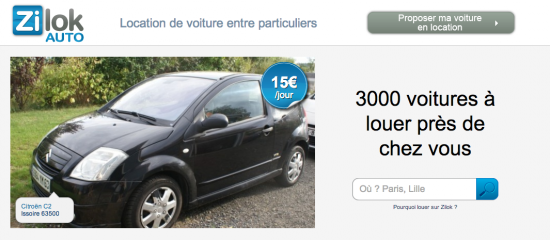
Fondée en 2007 par Marion Carrette, la plateforme collaborative Zilok Auto a donc bénéficié de cet investissement, auquel s’ajoute une nouvelle participation du fonds Jaina Capital. Au total, la jeune pousse aurait donc levé 1,5M €. La start-up propose notamment un service de location de voitures entre particuliers pour en optimiser l’usage. Zilok Auto, qui compte 3 000 voitures disponibles à la location, revendique depuis juillet 2012 une forte progression des abonnés et des transactions.
Grâce à cette augmentation de capital, Zilok Auto  compte déployer son offre, en augmentant le nombre de voitures disponibles.

Source: Frenchweb

mardi 9 octobre 2012

Amazon lance un programme de prêts pour ses vendeurs


Le géant de l'e-commerce vient de mettre en place aux Etats-Unis un programme de prêt baptisé Amazon Lending. Certains marchands commercialisant leurs produits sur sa marketplace ont en effet reçu par mail une proposition de prêt émanant de sa filiale Amazon Capital Services. Ceux dont la performance sur sa place de marché leur a permis d'être pré-qualifiés par la firme recevront une réponse à leur demande, accompagnée des fonds, sous cinq jours ouvrables. Selon le cabinet de conseil ChannelAdvisor, Amazon prête jusqu'à 800 000 dollars à certains marchands et les taux d'intérêts varient de 1 à 13% selon les vendeurs.

Les banques et autres sources de prêts habituelles des marchands se montrant particulièrement frileuses en ces temps de crise, il se crée un espace pour des sources de financement alternatives. Avec son programme de prêt, Amazon s'expose à un risque de crédit plus élevé, mais compte permettre à ses vendeurs d'acheter davantage de stock et d'augmenter leurs ventes sur sa marketplace, lui rapportant davantage en commissions. Une initiative prise juste à temps pour la période des achats de Noël.

Source : Journal du Net

Quand la démarche d'un individu sert d'antivol pour son téléphone


phone gait

L'université de Pittsburgh travaille sur une application qui reconnaîtrait la démarche de son propriétaire. Et qui pourrait peut-être du coup être utilisée pour bloquer le téléphone si celle-ci changeait brusquement.
Reconnaissance faciale, reconnaissance digitale, et bientôt la reconnaissance de la démarche. Le but ? Proposer des systèmes d'identification alternatifs, moins invasifs et proposant un niveau de sécurité élevé. L'idée a déjà suscité plusieurs programmes de recherche, comme celui, l'année dernière, de chercheurs sino-européens qui ont travaillé à implanter des capteurs dans le sol permettant d'identifier une personne. Dernier projet en date : celui d'une équipe de chercheurs du Departemental of Electrical and Computer Engineering University de Pittsburgh, qui eux souhaitent transposer ces méthodes d'identification sur le téléphone. Ils ont mis au point une application Android qui reconnaît le pas normal ou rapide d'une personne et est capable d'identifier son propriétaire. Et qui pourrait peut-être permettre par exemple de bloquer un téléphone si celui-ci était considéré comme volé, suite à un changement drastique de démarche de la personne qui le porte.

Une précision millimétrée

Pour le mettre au point, les chercheurs ont exploité les données des capteurs des accéléromètres et du gyroscope des téléphones. Le développement de l’application, réalisé auprès d’une trentaine d’individus, s’est concentré sur les démarches normales et rapides des utilisateurs, sur des périodes de cinq à dix minutes, sur une distance courte et plane. Les chercheurs ont d’abord développé un logiciel capable de collecter les données issues des différents capteurs. Dans le cadre de ces travaux, le gyroscope, présent sur chacun des smartphones, a permis de localiser le téléphone, placé dans la poche droite, contre la hanche de chacune des personnes. Chaque individu a par la suite parcouru une distance précise, soit un vecteur, d’une vingtaine de mètres pendant un temps donné, à une allure déterminée.

Des bénéfices technologiques et médicaux

Les capteurs de l’accéléromètre ont alors relevé le nombre et la fréquence de pas effectués, les points d’impacts du pied droit ainsi que la vitesse de chaque personne. D’abord enregistrée à vitesse dite normale, l’opération a été également répétée à marche rapide. Les données ont ensuite été fusionnées et ont permis d’établir une identité de démarche propre à chacun des individus. Une fois la fiche de chaque personne déterminée, la multiplication de la manœuvre a permis de délivrer un taux d’identification proche de 100% de la démarche de chacun. Afin d’augmenter ce taux, les données enregistrées ont permis notamment par la suite une amélioration des différents capteurs de l’accéléromètre et du gyroscope des smartphones par les scientifiques.

Source: L'Atelier

lundi 8 octobre 2012

En Finlande, les lois aussi peuvent être crowdsourcées


vote

Le pays a mis en place une réglementation qui permet aux citoyens de suggérer des lois, qui seront votées s'ils rassemblent 50 000 signatures. Une plateforme de crowdsourcing a du coup été lancée, pour faciliter les initiatives.
Depuis le 1er mars, la constitution finlandaise a intégré une clausepermettant à tout citoyen majeur de soumettre au Parlement des propositions de lois ou d'amendements. Si l'une de ces propositions est soutenue par 50 000 signatures, elle devra être soumise au vote des parlementaires. Pour faciliter l'engagement des citoyens et leur accès aux propositions, une organisation non gouvernementale a du coup mis au point Open Ministry. Menée par Joonas Pekkanen, la plateforme fait appel notamment à des avocats, et permet aux individus de mieux formaliser leurs suggestions et de rassembler plus aisément autour. Une initiative de crowdsourcing sur la gouvernance de son pays, finalement.

Une existence validée

Et bonne nouvelle : il y a quelques jours, le gouvernement a approuvé et validé la technologie d'authentification électronique utilisée par le site. Une validation qui assure que les données privées des citoyens sont correctement préservées. Et qui permet de valider le fait que le gouvernement prendra en compte les propositions émises par des individus en provenance d'Open Ministry. Cette solution consiste en fait en l'utilisation d'API mises à disposition par les banques et les opérateurs, et qui impose aux internautes de s'identifier en utilisant leurs codes de client d'une banque, ou leur téléphone mobile. Ainsi, ils ne transmettent que les données nécessaires qui justifient leur légitimité pour cet acte.

Passer par sa banque

Dans le détail, la plateforme open source propose aux citoyens de soumettre des idées. Celles-ci peuvent être commentées, affinées, améliorées, par l'organisation, les avocats avec qui elle collabore, et les membres. Toutes les propositions ne sont pas acceptées. Celles qui le sont ensuite mises en forme par les avocats. Pour communiquer, la plateforme essaie également d'être la plus présente possible sur les réseaux sociaux. Open Ministry a ouvert officiellement ses portes le 1er Octobre 2012 et compte déjà quelques projets de loi variés comme l’interdiction d’élevage pour la fourrure (43 500 signatures) ou encore l’interdiction des boissons énergisantes pour les moins de 16 ans.

Source : L'Atelier

The Mobile 15: Our picks for the most innovative companies


These are the companies, startups and giants alike, that are changing or could potentially change the mobile landscape in the most profound ways.
The-mobile-15-logo
The mobile industry has changed radically in just a few years:  We’ve had the smartphone revolution and the app revolution. And it was only three years ago that the tablet was written off as failed experiment. Now, it is testing the physical boundaries of the internet.
What’s next? Faster and cheaper mobile networks, an array of new devices to connect to those networks, disruptive payment models, and more captivating user interfaces. So which companies are likely to help power that new wave of innovation? Welcome to The Mobile 15.
These aren’t necessarily the most successful companies in the mobile world, though you could argue that a few of them might qualify for those lists as well. Rather, what we’re highlighting here is simply innovation: These are the companies, startups and giants alike, that are changing, or could potentially change, the mobile landscape in the most profound ways. We’ll be talking about this list — as well as many of broader themes and challenges in mobile– at Mobilize, our conference in San Francisco later this week.
The Mobile 15 includes some big brands, like Alcatel-Lucent and Samsung, but also some lesser-known names, like the printed memory company ThinFilm and crowdsourced traffic app developer Waze. Some of our picks may surprise you, like the inclusion of long-suffering Nokia. We know Nokia has hit a rough patch in recent years, but we think its attempts to radically reinvent itself with a new OS and new technologies are compelling — see more on our rationale below.
A word about our methodology: To create the list, we didn’t simply pick a bunch of names we liked and throw them into a spreadsheet. Our team — which included writers Katie Fehrenbacher, Kevin Tofel, Ryan Kim and Stacey Higginbotham– submitted dozens of candidates in categories ranging from app development to handset technologies to infrastructure vendors. We even included the Internet of Things — companies are turning everything from medical devices, energy-management systems and product packaging into small mobile computers.
We then graded every company on several different measures of innovation. Those with the highest total innovation scores earned a spot on our Mobile 15 list. Some of these companies, like Israeli startup Intucell,  are working on one-time innovations, while others, like Apple, of course, have a longer track record of breakthroughs. What connects all the companies on our list is that they will have a big impact on the mobile industry.
So keep your eye on these companies in coming months. To the 15!

Source : GigaOM

Sep 19, 2012 - 10:16AM PT Building data startups team up around real-time energy data


Building data startups Honest Buildings and Lucid Design Group are teaming up to put the real time energy data of thousands of commercial and government buildings online.
Lucid Buildings Dashboard_Constellation Energy_750 East Pratt Street_Baltimore_MD-1 copy
Two startups with tools that can unleash the hidden data within buildings have teamed up around real time energy data. Lucid Design Group, which installs energy dashboards and wireless sensor systems for buildings, has integrated its customers’ real time energy data into Honest Building‘s site that aggregates data about the energy use and green characteristics of buildings.
Essentially, the bulk of Lucid Design Group’s building customers (2,000 of ‘em) — like Brown University, Turner Construction and the city of Bloomington, Indiana — will be displaying their real time energy data on Honest Building’s site. For example, in the screenshot below, you can see the energy use of DPR Construction’s office building in San Diego by 15 minute intervals, broken down by appliance, and compared to national and local averages.

Honest Buildings has created a site that pulls in data about energy use and green characteristics of buildings from a variety of sources including data from the building owners, green building technology service providers and public databases. The Honest Buildings team displays all this data for free online, and hopes to promote transparency and some friendly competition between building managers by exposing this data (they also have a subscription premium service).
Real time energy data could add a level of granular data that the Honest Building’s site previously didn’t have. As the two companies explained to me in a phone interview this week, a lot of the publicly-available data about building energy use is annual, which doesn’t paint too accurate a picture of what it’s like to rent space or live in the building. But real-time energy data allows building managers or potential tenants of the buildings to get a much better sense of the costs and energy usage of the buildings.
Honest Buildings earlier this month raised its first round of venture funding led by RockPort Capital and Mohr Davidow Ventures. Previously the company, which is about a year old, raised an angel round from Spring Ventures; Jason Scott, managing partner at EKO Asset Management Partners; and Lisa Gansky, author of The Mesh. Lucid Design Group, founded in 2004, has raised $1.5 million led by Dry Creek Ventures.

Source : GigaOM

vendredi 5 octobre 2012

The 14 Most Interesting Startups To Emerge From DEMO


8048935638_f0b18d8c78_z DEMO Fall 2012 wrapped up in Santa Clara today, where 77 startups took the stage to show off their apps, services and products. The young companies were given six minutes to pitch their ideas and impress the audience, collectively competing for the $1 million advertising prize that went to the idea with the most promise.
From a bird identification app and an “Internet of Things” to apartment finders and augmented reality, here are the 14 startups that stood out from the pack during the three-day launch event.

The Winners

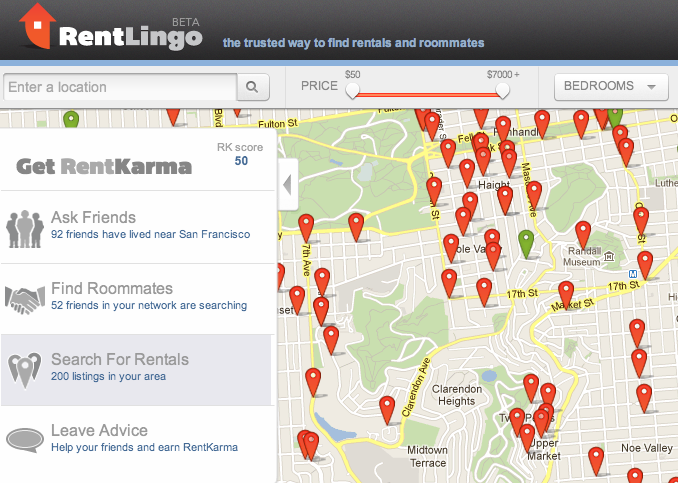
RentLingo, which was picked as the best of the “Alpha Pitches” given by student entrepreneurs, began as a simple class project at Stanford. Co-founders Dan Lauer and Byron Sing interviewed hundreds of tenants, apartment owners and property managers, during which a pattern emerged. Although there are scores of sites that allow you to browse apartment listings, there is no easy way to find information on prospective tenants, roommates or sublets.
So RentLingo decided to use social networking to make the rental process less of a pain in the ass and help landlords find great tenants and renters find the best apartments. To do that, the startup aggregates info from the major listings players and uses Facebook’s Open Graph to give users social context as they search for apartments. It presents this all via a dynamic map UI, giving listings more of a localized feel and allowing you to see what friends have lived in a particular area and reach out to them (within the app) to ask questions.
Your friends can then drag and drop a comment about the apartment, all of which is visible to people within your network and social graph. The site aggregates and lets you view all of this social sentiment around each listing, aiming to provide a more effective and relevant “review” system. Listings with reviews from your network show up as blue pins, while national listings show up as red pins, all of which can be easily filtered by price, size, location and recency.
The idea is to turn the platform into a place where owners go to see what renters are saying about them (a la Yelp) and to help students and renters find great spots with the help of their social graph and location targeting. With Padmapper, Craigslist, Zumper and seemingly hundreds more, it’s a crowded space, but RentLingo has taken a unique angle that could be powerful at scale.
Austin-based Ube (pronounced yoo-bee) took home the “People’s Choice Award” at DEMO because it plays into our sci-fi-fueled visions of what technology will do to our homes over the next few decades. The startup is trying to take the unintuitive and costly world of home technology and make it simple and cheap, while removing the need for extra hardware or programming.
Ube’s app allows users to easily control IP-enabled smart devices using their Android or iPhone. This includes smart TVs, set top boxes, AV receivers, DVD players, thermostats, garage doors openers and more. You can even use the app to control your devices while you’re away from home using the Ube Cloud — all you need is a smartphone and a WiFi router. The company said that its app will work with over 200 IP-controlled devices when it launches next month. Peter covered Ube’s launch yesterday, which you can check out here for an in-depth review.
It was also a big day for Rock Health (and healthtech at large), as two of DEMO’s five winners were part of the health accelerator’s most recent batch. We covered Rock Health’s third batch here, and descriptions are included below.
Neumitra develops data-driven technologies to address the effects of stress on health, productivity, and happiness. More specifically, the company is developing both wearable and mobile tech that uses biosensors to monitor your autonomic nervous system and the contextual and personal cues that set off stress. The company collects that data, offering analytics and a dashboard that highlight key metrics — both for individuals and large organizations.
At DEMO, Neumitra presented its newest product, Bandu, a smart watch that helps users reduce stress and “slow down.” Using smart sensors to identify biometric signals, Bandu monitors your body temperature, motion and skin conductance. When it finds significant changes in the norm (i.e. red flags that indicate an increase in stress), the device prompts you to take a number of mood-altering actions, of the non-narcotic or barbiturate variety, of course. Sending notifications to your phone, Bandu might suggest that you play a game, or call a kindly grandmother, or play some music.
NeuroTrack is a suite of behavioral assessment tools (software-based cognitive/visual tests) that can help identify the symptoms and diagnose Alzheimer’s disease and cognitive impairment up to four years before their onset. Nerotrack works with pharma companies and researchers to recruit candidates for clinical trials and to help measure drug efficacy, thereby speeding up the process of drug development.
DEMO saw the launch of NeuroTrack’s newest product, which aims to make Alzheimer’s diagnosis more widely accessible by removing the need to take an eye-tracking test and, instead, simply allows users to take the test using a mouse or trackpad.
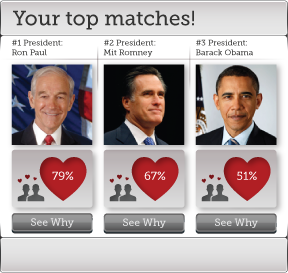
ElectNext aims to help anyone and everyone get informed and stay engaged with important political issues. People are busy and generally stay away from politics, but apparently our votes count and can help shape policy that determines how we live our lives — or at least so we’re told. At the very least, we could all stand to be a little bit more informed. So, ElectNext aims to make that easy through a little visual Q&A and some dating dynamics.
The end-goal is to match users with the right politician (the one who aligns closest with your political views) and does so by prompting them to choose the three issues that matter to them most. The site then asks an additional ten questions, using your responses to determine your political match. If that doesn’t satisfy, users can go through each question, digging down into the data and compare each politician’s stand on the particular issue.
Users can then make a donation to their chosen candidate and engage with them on various networks. Obviously, it’s simple as is, but you can see this potentially being a useful platform for politicians to engage their constituency based on issues that matter to them and a way to disseminate propositions (oh, California), petitions, etc. ElectNext itself simply wants to create a tool that increases voter participation in the U.S. Even if this isn’t the way to do it, the goal is an admirable one. But good luck with the young people, I hear they’re apathetic.
Ecolek’s Birdeez grew out of a student project at UC Santa Barbara. A bird in the hand is worth two on your phone, or something. The app, simply put, helps bird-watchers identify and track whales. No, just kidding, it helps them track birds they see on their routine bird-watching adventures. Birdeezows read descriptions of the avian animals you identify, keep track of all your sightings and even tweet about it. Get it? Tweet? Warning: This app may not have quite as much utility if you’re an urban dweller. You can only identify pigeons so many times.
Flinja is out to help college students and recent grads find jobs — at least part time. Which is an awesome mission given the un-and-underemployment epidemic among this age group. Flinja wants to turn college students into a freelance workforce, offering an eMarketplace in which they can make themselves available for freelance work. A bit like Zaarly or TaskRabbit with a twist, students post the services they want to provide and employers and faculty can book directly. The idea, writ large, is to give students one place where they can search for jobs and internships, make connections and build a professional network and make a few bucks on the side.

Notables

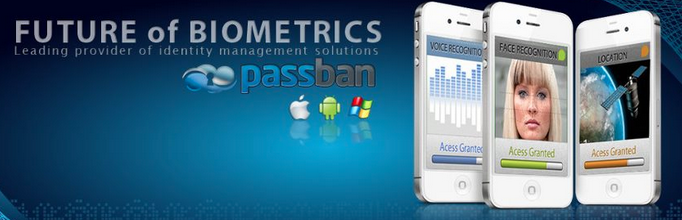
PassBan — One of my favorite products from DEMO was PassBan, an app that offers multi-factor verification for your mobile device and more. While there are a multitude of security apps and password keepers that help keep devices and sensitive digital info secure, few offer users the ability to unlock websites and devices by way of voice, motion, facial recognition, location and token verification.
Users can set up their phones, for example, so that access is granted only by scanning their glorious visage. On top of that, the app (which will be available on iOS and Android in the coming months) lets you choose different levels of security for individual sites or apps, so you could keep nosey roommates out of your Dropbox account or your Gmail. Or maybe your son or daughter has been racking up your bill from in-app purchases in a game on your iPad, in which case you could have PassBan grant access if and when it hears your voice.
Another cool feature: The app works remotely, so that you could, say, grant or deny access to websites your progeny is trying to view at home while you’re at work. Users can pick and choose between voice, face, location, etc. for different apps and websites or set up a combo of those on one particular app or website. The startup is currently in beta and will be launching to the public soon. So stay tuned.
Bizness Apps: We’ve written about this startup a number of times, thanks to their simple tools that allow individuals or businesses to quickly and affordably create their own mobile apps for iOS, Android or the Web (with HTML5) — even if they don’t have any technical know-how.
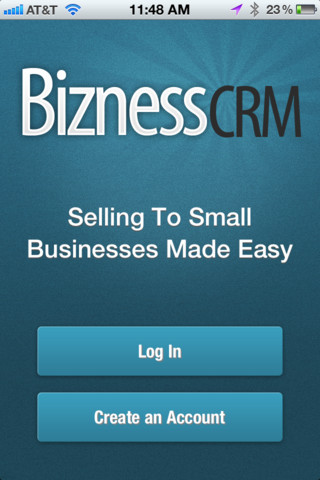
While the startup also offers a white-label program for DIY app development, at DEMO the startup added a new product to its growing arsenal of tools for the SMB market. The new product, called Bizness CRM, was initially built internally to help its white-label resellers sell apps and websites to startups and small businesses. Unable to find a good third-party product to recommend for those looking to sell to SMBs, the team turned it into a product.
One of the CRM platform’s key features is a lead generator that allows users to find leads in any industry, any location and then narrow that list based off of optional criteria, like “has website” or “has Twitter page,” etc. Obviously, a small business that has a quality website and a social media presence is much more likely to invest in a mobile app if they’ve already seen results from traditional marketing, so this helps sales teams and marketers save time and narrow the field.
The platform also includes a tracking pipeline, a scheduling calendar, a metrics dashboard, team collaboration and a native iPhone app to track sales on the go.
Portland-based Tellagence is making a bold claim: The startup believes that it has developed technology that allows it to predict the flow of content on social networks — who will share information on any network. Simply put, the social prediction technology uses algorithms to analyze and measure the enormous amount of interactions, behavior and changes that take place every day across social networks.
Not just another social analytics platform, Tellagence instead calls itself a “conversation monitoring system” that identifies context and relationship dynamics to predict the path of communication. The goal is to allow brands and businesses to optimize marketing efforts and increase reach by moving away from focusing on individual influencers to targeting smaller, key group of users and their most significant relationships.
The startup’s first product focuses on Twitter and is geared toward enterprise marketers. For more on the science, go here.

Ones To Watch

YouBetMe is an app that lets you challenge your friends (and strangers) to a wager about anything — at anytime. The app lets you capitalize on all of life’s betting opportunities, whether it’s on Monday Night Football, whether your startup will get covered by TechCrunch, how many Jello shots you can take, etc. Users can also create and confirm bets on the go through the app’s SMS-based betting platform, tracking betting data and view public ratings designed to keep bettors honest.

Bonfyre is a photo and content-sharing app that lets users create private groups to share with those who matter most (and will find the share relevant). Those private groups are created around events, which become part of group photostreams and forums to enable reminiscing, event planning and good ole realtime mobile sharing.

Blipboard is a personalized mobile map of the exciting stuff happening around you. The map surfaces places and events nearby based on the activity and interests of your friends, influencers and other businesses. Users can create “blips” or location-based alerts designed to attract others to the venue. The app is headed to the app store shortly.

Candy Lab’s new mobile app uses augmented reality to turn the world around you into a video game — with advertising. The company calls Cachetown a combination of “Google AdWords, Foursquare, and Super Mario Brothers,” delivering its game layer in location-based AR.

Top Photo Credit: Stephen Brashear
 
Source : Techcrunch